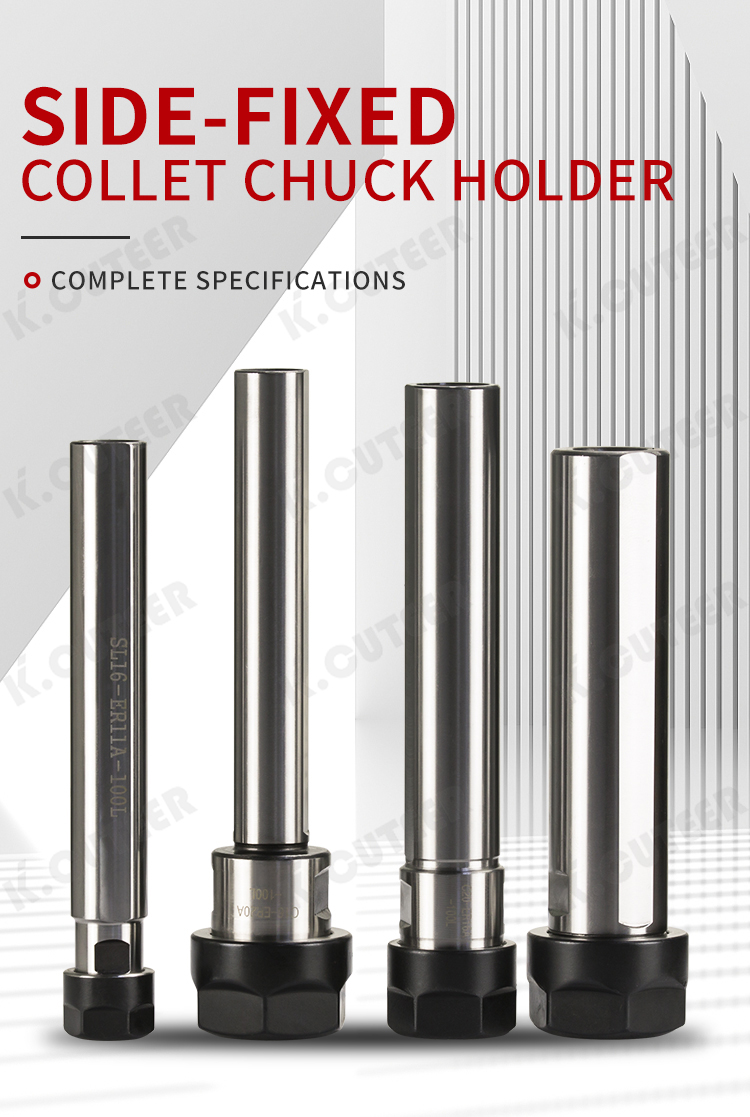
| Quantity: | |
|---|---|
The holder consists of a hardened steel body with a straight, precision-bored hole. One or more hardened set screws (Allen screws) are threaded radially into the body, perpendicular to the bore. To mount a tool, it is inserted into the bore, and the set screws are tightened directly against the tool's shank, typically into a provided flat on the shank (e.g., a Weldon flat) to prevent rotation.
Key Features:
Mechanism: Radial set screw(s) for direct, mechanical locking.
Tool Interface: Accommodates tools with cylindrical or flat shanks (e.g., Weldon shank end mills).
Strength: Exceptionally rigid due to minimal moving parts and solid body construction.
Runout: Generally higher than precision systems like hydraulic or shrink-fit chucks, but sufficient for roughing and many semi-finishing operations.
This type of extension is the go-to choice for demanding material removal where reach is required.
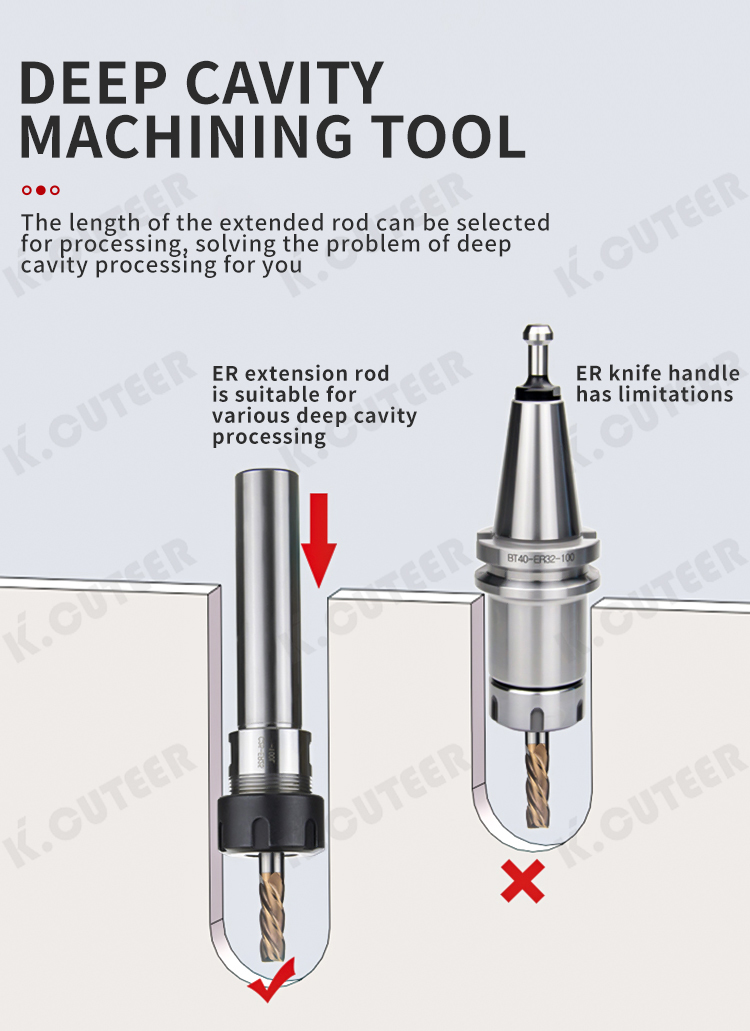
Heavy-Duty Milling & Roughing: Ideal for deep cavity roughing, slotting, and shoulder milling with long-reach end mills where high cutting forces are generated.
Deep Reaching in Hard Materials: Used in die/mold machining, aerospace component machining, and anywhere a long tool must remove significant material without deflection.
Key Advantage - Maximum Rigidity: The solid-body, direct-clamp design provides superior resistance to bending and vibration under load compared to collet-type extensions of similar length.
Cost-Effectiveness: It is typically less expensive than high-precision, damping extension systems and has no consumable parts (like collets).