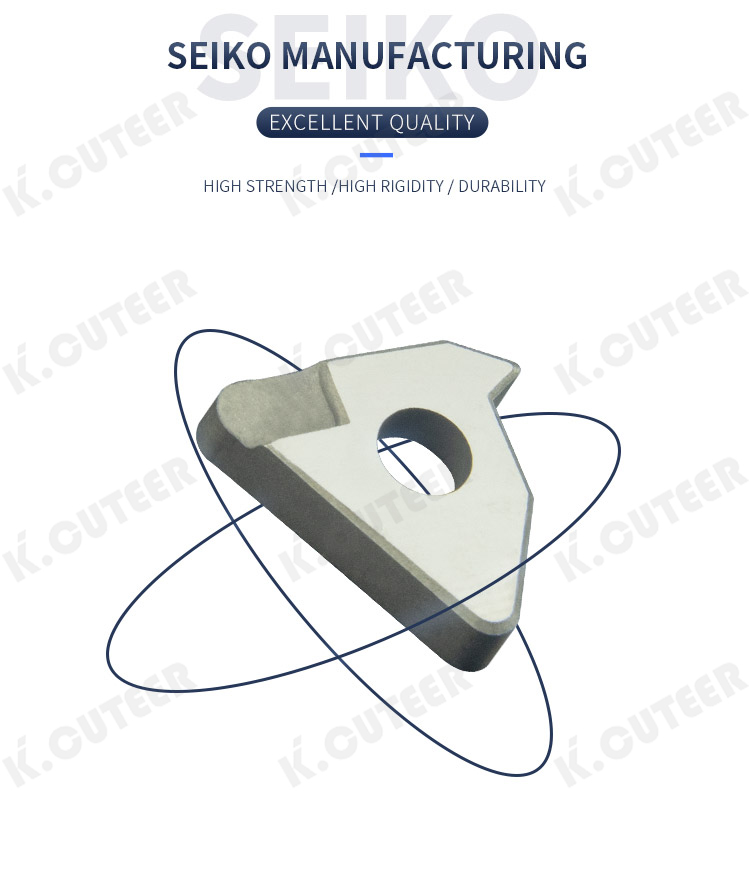
Key Features & Benefits:
1. Precise Height Positioning: The primary function of a tool shim is to ensure the cutting insert is positioned at the correct height relative to the tool holder's centerline. This is critical for achieving accurate cutting geometry and dimensional control of the machined part.
2.Protection of Tool Holder: It acts as a sacrificial layer, protecting the more expensive tool holder pocket from wear, indentation, and damage caused by the clamping forces and vibrations during cutting. This significantly extends the life of the tool holder.
3.Improved Stability and Damping: A well-fitted shim can enhance the overall stability of the insert within the pocket, helping to dampen vibrations and reduce the risk of chattering.
4.Heat Insulation: To some extent, it can help dissipate heat away from the insert and tool holder.
5.Efficient Chip Evacuation: Many shims are designed with features that help create space for smooth chip flow, preventing chips from clogging and damaging the tool or the workpiece surface.
Common Applications:
Tool shims are universally used in modern metal cutting operations involving indexable inserts:
1.Face milling and shoulder milling cutters.
2.Boring bars and boring heads.
3.Turning tool holders.
4.Grooving and parting tools.
Material and Design:
1. Material: Typically made from hardened and tempered tool steel or carbide to withstand high pressure and resist deformation.
2.Design: They are engineered to match the exact shape of the insert (e.g., square, triangular, round) and often feature locating holes or tabs for perfect alignment within the tool pocket.